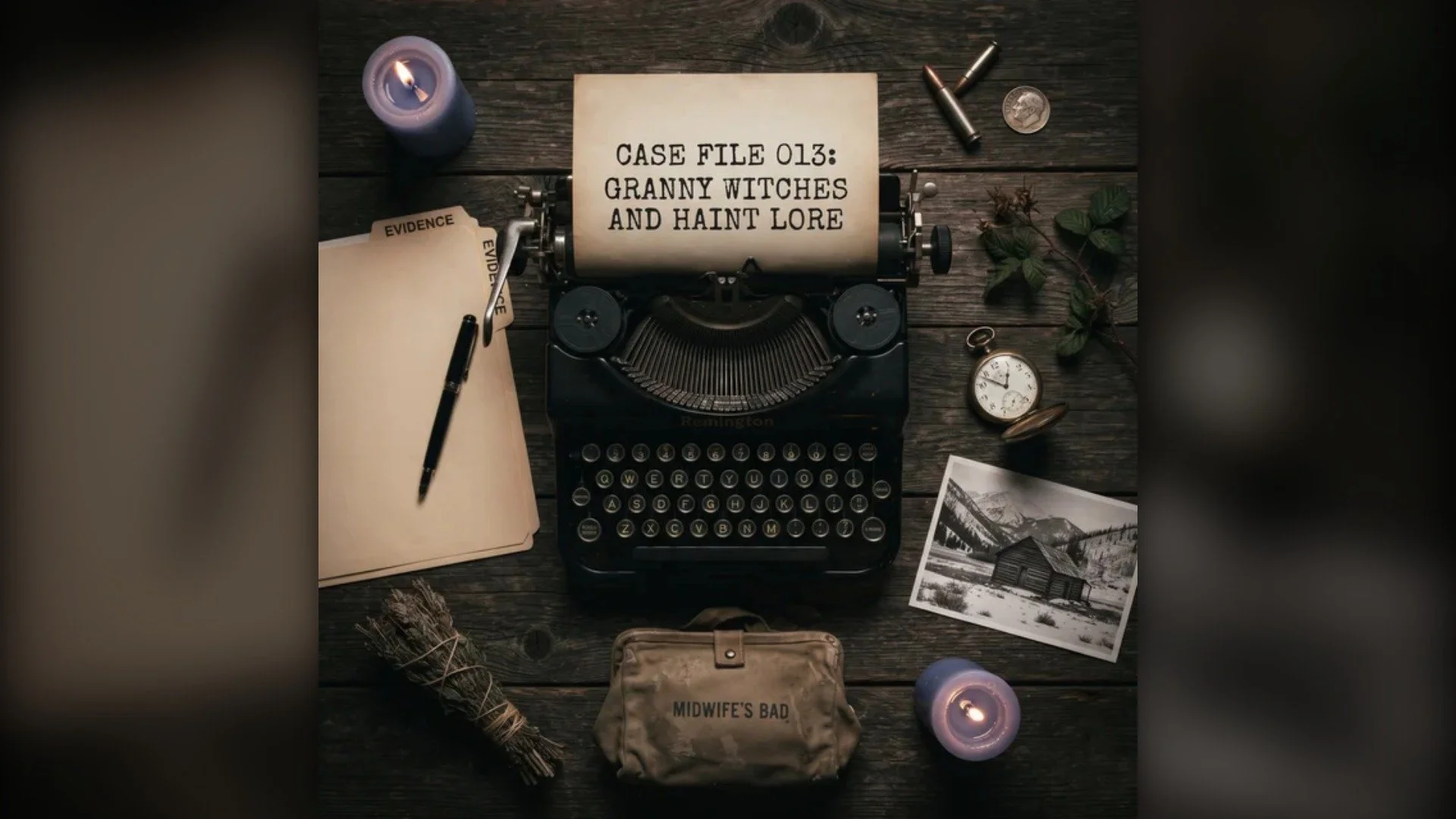
Southern Appalachia, the 1920s. A snowstorm, a swollen creek, and no doctor for a day's ride. So you went and fetched Granny.
This week, we sit down with the granny women of the mountains: the midwives and healers who carried herbs in one hand and whispered charms in the other, and who were sometimes called witches by the same neighbors whose babies they delivered.
🎧 Listen now: Spotify · Apple Podcasts & everywhere else
Case at a glance
Topic: Granny women, folk healing, and mountain superstition
Where: The Southern Appalachian mountains
When: Roughly the 1800s through the mid-1900s, with traditions that live on today
Category: Folklore and history
Tone: Cozy, curious, and a little bit witchy
Who the granny women really were
In mountain communities without doctors or hospitals, granny women were the ones who showed up. They delivered babies, set bones, treated fevers, and sat with the sick and the dying. Their knowledge came from a blend of traditions: Scots-Irish, English, German, African, and Cherokee, passed down mostly by word of mouth.
Charms, whispers, and rules
Some granny women were known for "blood-stopping," reciting a verse to stop bleeding, or for "drawing out" the fire of a burn. These charms came with their own rules, including who you were allowed to pass them to, and when. In the episode, we dig into how those traditions worked and why people trusted them.
When healer became witch
The line between healer and witch could be thin. Butter that wouldn't churn, a cow that stopped giving milk, or a run of bad luck could turn suspicion toward a woman who knew too much. We look at the silver bullet, witch bottles, and how a single witch story could turn a whole community against someone.
Haints and haint blue
Ever seen a porch ceiling painted that soft, sky-colored blue? Haint blue comes from Gullah Geechee tradition, meant to confuse spirits, or haints, and keep them from crossing into the home. We trace where the tradition came from and how it spread.
Sitting up with the dead
Stopped clocks, covered mirrors, and neighbors sitting up all night with the body: mountain death customs were full of meaning. We walk through what these rituals were, and what they were meant to protect against.
Granny Hayden, and the women history forgot
We also tell the story of Granny Hayden, a Black midwife from Black Mountain who practiced until she was 90, and talk about how granny women were slowly pushed out by medical licensing laws and left out of the history books.
Did you grow up with any of these traditions? We'd love to hear your family's sayings, signs, and stories.
Sources
Blue Ridge Country, "The Heart of the Hills"
Smithsonian Center for Folklife and Cultural Heritage, "In Appalachia, Women Carry Traditions in Folk Magic and 'Granny Witchcraft'"
NCpedia, "Midwives"
StoryCorps / KUOW, "A granddaughter passes on the legacy of 'Granny Hayden'"
Shoemaker Folk Cultural Documents, Ursinus College (letter from Mrs. Francis Watt, 1956)
NC Ghosts, "Protection from Witches"
National Folklore Collection (Ireland), Schools' Collection
Gullah Geechee haint blue history, via Beaufort.com and Atlas Obscura
Appalachian Heritage, "Death and Burial in the Mountains"; AppalachianHistory.net, "An Old Time Appalachian Burial"
"The 'Midwife Menace' and How We Forget" (thesis)
Pull up a chair, Holler Dwellers
Did your granny have a saying, a cure, or a sign she swore by? We'd love to hear it. Send it our way, and it might just end up on the show.
New episodes every Monday. If you enjoyed this one, a quick rating or review on Spotify or Apple Podcasts helps more folks find their way to the fire. 🕯️
Hosted, researched, and produced by KT.
